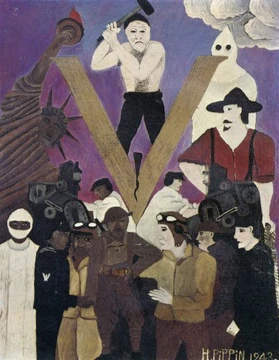
Minority group
A group experiencing disadvantage relative to a dominant social group.
The meaning of "minority group" shifts depending on the situation. In everyday speech, it often simply describes any group that makes up less than half of a population. But in sociology, economics, and politics, a group that is numerically smaller isn't automatically called a "minority" if it holds the most power. Academics usually apply the term to people who face relative disadvantage compared to a dominant group, regardless of their actual numbers. For instance, during Apartheid in South Africa, black Africans were considered the "minority group" even though they outnumbered white Europeans, because white Europeans controlled virtually all social, economic, and political power. To resolve this confusion, Harris Mylonas suggested the term "non-core group" for any collection of individuals seen by a country's ruling elite as an unassimilated ethnic group—based on language, religion, physical traits, or ideology—and to reserve "minority" only for groups that have been granted specific minority rights by their state.
Membership in a minority group usually stems from visible traits or practices, such as ethnicity (ethnic minority), race (racial minority), religion (religious minority), sexual orientation (sexual minority), or disability. Using the idea of intersectionality, a single person can belong to several minority groups at once (for example, both a racial and a religious minority). Likewise, someone might be part of a minority in some ways but part of the dominant group in others.
The term "minority group" often appears in discussions of civil rights and collective rights, because minority members tend to receive differential treatment in their countries. They frequently face discrimination in housing, employment, healthcare, and education. This discrimination can come from individuals, but it can also be built into structural inequalities, where rights and opportunities are not equally available to everyone. People who support minority rights often push for laws that protect these groups from discrimination and grant them the same social status and legal protections as members of the dominant group.
In the 19th century, "minority" mainly referred to political parties in national legislatures. It could mean the better-educated and wealthier people who feared being overwhelmed by an expanding voting population—as Jenifer Hart put it, "those who have"
- field
- Sociology, political science, law
- known_for
- Describing groups experiencing relative disadvantage and discrimination
- related_concept
- Non-core group (proposed by Harris Mylonas)
- key_definition
- Louis Wirth: a group singled out for differential and unequal treatment
- alternative_term
- Historically excluded groups (HEGs)
Lore & Background
In the 19th century, the term "minority" primarily referred to political parties in national legislatures, including the better-educated and better-off who feared being swamped by broadening franchise, the less-popular party in a two-party contest, and least-popular third parties. This changed with the Paris Peace Conference (1919–1920), when the term was applied to ethnic, national, linguistic, and religious groups who made up less than half of a state's population. The conference has been attributed with coining the concept of minority rights. The League of Nations Minorities Commission in 1919 defined members of a minority as "nationals belonging to racial, religious, or linguistic minorities." Protection of minority groups, such as through careful drawing of boundaries and proportional representation, was seen as integral in preventing future wars.
Sociologist Louis Wirth defined a minority group as "a group of people who, because of their physical or cultural characteristics, are singled out from the others in the society in which they live for differential and unequal treatment, and who therefore regard themselves as objects of collective discrimination." Joe Feagin stated that a minority group has five characteristics: suffering discrimination and subordination; physical and/or cultural traits set apart and disapproved by the dominant group; a shared sense of collective identity and common burdens; socially shared rules about who belongs; and a tendency to marry within the group. The framework of intersectionality recognizes that an individual may simultaneously hold membership in multiple minority groups, or be part of a minority group in some characteristics but part of a dominant group in others.
Reader's Guide
The concept of minority group is central to understanding social stratification, discrimination, and civil rights. The term carries ambiguity: common usage indicates a statistical minority, while academic usage refers to power differences among groups. This distinction is critical, as seen in South Africa under apartheid, where black Africans outnumbered white Europeans but were considered the minority group because white Europeans held virtually all social, economic, and political power. To address this ambiguity, Harris Mylonas proposed the term "non-core group" for unassimilated ethnic groups perceived by the ruling elite, reserving "minority" for groups granted minority rights by their state.
Minority group membership is typically based on observable characteristics or practices, and members often face discrimination in housing, employment, healthcare, and education. Discrimination may be committed by individuals or occur through structural inequalities where rights and opportunities are not equally accessible. Those in favor of minority rights often pursue laws designed to protect minority groups from discrimination and afford them equal social status and legal protections. The term "historically excluded groups" (HEGs) is sometimes used to highlight the role of historical oppression and domination resulting in under-representation. There is no legal definition of national minorities in international law, though protection is outlined by the United Nations Declaration on the Rights of Persons Belonging to National or Ethnic, Religious and Linguistic Minorities. The Council of Europe regulates minority rights in the European Charter for Regional or Minority Languages and the Framework Convention for the Protection of National Minorities.
Did You Know?
- In South Africa during apartheid, black Africans were considered the minority group despite outnumbering white Europeans, because white Europeans held virtually all social, economic, and political power.
- Harris Mylonas proposed the term 'non-core group' to refer to any aggregation of individuals perceived as an unassimilated ethnic group by the ruling political elite, reserving 'minority' for groups granted minority righ
- The Paris Peace Conference (1919–1920) has been attributed with coining the concept of minority rights and bringing prominence to it.
- Louis Wirth defined a minority group as a group singled out for differential and unequal treatment based on physical or cultural characteristics, who regard themselves as objects of collective discrimination.
Frequently Asked Questions
What is a minority group in sociology?
A minority group refers to a population that experiences relative disadvantage and unequal treatment compared to a dominant group, regardless of how many members it actually has. Louis Wirth's classic definition frames it as a group singled out for differential and unequal treatment within a society.
Does 'minority group' always mean a numerically smaller population?
No—numerical size is not the deciding factor. A group can be the numerical majority yet still be classified as a minority group if it lacks power and faces systemic discrimination, as was the case with Black South Africans under Apartheid despite outnumbering white Europeans.
How does 'minority group' differ from the term 'non-core group'?
The term 'non-core group' was proposed by Harris Mylonas as an alternative label that emphasizes exclusion from the center of social and political power rather than implying a fixed numerical status. Both concepts point to the same underlying idea of a group positioned below the dominant one in a hierarchy of treatment.
In which academic fields is the minority group concept used?
It appears across sociology, political science, and law, where scholars use it to describe and analyze patterns of discrimination and structural inequality. The concept also surfaces in everyday language, though casual usage often reduces it to a simple head-count threshold.
Why is the minority group concept important in Social Identity & Prejudice studies?
It gives researchers a shared vocabulary for identifying who bears the brunt of prejudice and institutional bias, separating the issue from mere population percentages. By anchoring the term in relative disadvantage rather than numbers, it keeps analytical focus on power dynamics and unequal treatment.
More in Social Identity & Prejudice 1-20
Spotted an error? Know more?
This is a living reference — every entry is fact-audited, and reader corrections feed straight into our audit queue. Suggest an edit · See this site's audit record