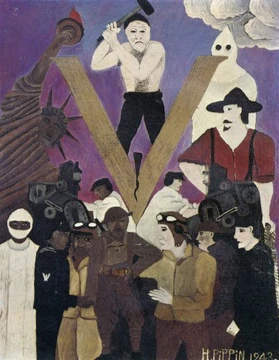
Discrimination
Unjustified distinctions depriving people of rights or opportunities.
Discrimination means making unjustified distinctions between people based on the groups, classes, or categories they belong to—or are thought to belong to—often in a way that denies them their legal or human rights. The group in question might be defined by traits like race, gender, height, age, class, religion, disability, or sexual orientation. This practice typically results in unfair treatment according to perceived statuses, such as ethnic, racial, gender, or religious categories, and it involves withholding opportunities or privileges from one group that are available to another. Discriminatory traditions, policies, ideas, practices, and laws appear in many countries and institutions worldwide, even in places where such discrimination is widely condemned.
- Etymology
- From Latin discriminat- 'distinguished between', from discriminare, from discrimen 'distinction', from discernere
- First recorded in English
- Early 17th century
- Key shift in meaning
- After the American Civil War, evolved to mean prejudicial treatment based on race, later generalized to membership in a socially disfavored group
- Former synonym
- Discernment, tact, culture (as in 'taste and discrimination')
- UN stance
- Discriminatory behaviors take many forms, but they all involve some form of exclusion or rejection
Lore & Background
The term discriminate appeared in the early 17th century in the English language, from the Latin discriminat- 'distinguished between'. Before the American Civil War, it was a synonym for discernment, tact and culture, generally a laudable attribute; to 'discriminate against' being commonly disparaged. Since the Civil War, the term generally evolved in American English usage as an understanding of prejudicial treatment of an individual based solely on their race, later generalized as membership in a certain socially disfavored group or social category.
Reader's Guide
Moral philosophers have defined discrimination using a moralized definition: acts, practices, or policies that wrongfully impose a relative disadvantage or deprivation on persons based on their membership in a salient social group. This is a comparative definition—an individual need not be actually harmed to be discriminated against; they just need to be treated worse than others for some arbitrary reason. Discrimination also develops into a source of oppression, the action of recognizing someone as 'different' so much that they are treated inhumanly and degraded. The United Nations stance includes the statement that discriminatory behaviors take many forms, but all involve some form of exclusion or rejection. Types of discrimination include ageism (most pervasive form of prejudice in the UK population, according to a University of Kent survey), caste discrimination (affecting an estimated 250 million people worldwide, mainly in parts of Asia and Africa), citizenship or nationality discrimination, class discrimination, disability discrimination (also called ableism or disablism), excellence discrimination, language discrimination, and name-based discrimination. Countervailing measures such as quotas have been used to redress the balance in favor of those believed to be current or past victims of discrimination, though these attempts have often been met with controversy and sometimes called reverse discrimination.
Did You Know?
- Before the American Civil War, 'discrimination' was a synonym for discernment, tact and culture, generally a laudable attribute.
- The United Nations states that discriminatory behaviors take many forms, but they all involve some form of exclusion or rejection.
- A University of Kent survey found that 29% of respondents had suffered from age discrimination, a higher proportion than for gender or racial discrimination.
- Caste discrimination affects an estimated 250 million people worldwide, mainly in parts of Asia and Africa, according to UNICEF and Human Rights Watch.
Frequently Asked Questions
Who is Discrimination?
Discrimination is the act of drawing unjustified lines between people based on the group, class, or category they belong to—or are assumed to belong to—thereby denying them rights or opportunities. It operates through perceived statuses such as race, gender, age, religion, disability, or sexual orientation.
What are Discrimination's powers/role?
Its core mechanism is withholding opportunities, privileges, or fair treatment from one group while extending them to another. It can manifest in legal, economic, social, or institutional settings, and its effects compound over time through systemic structures.
When did Discrimination first appear in the record?
The word traces back to the Latin root meaning 'distinguished between,' first surfacing in English in the early 17th century. Its meaning shifted dramatically after the American Civil War, when it came to denote prejudicial treatment rooted in race before broadening to any socially disfavored group membership.
How does Discrimination's story end?
There is no single 'ending,' but international frameworks—most notably UN declarations—recognize that discriminatory behaviors take many forms while all center on the same core act of unequal treatment. Ongoing legal, social, and institutional efforts aim to dismantle its structures, though it continues to evolve in new contexts.
Why is Discrimination important to the encyclopedia?
It sits at the intersection of social identity and prejudice because it is the behavioral output—what people actually do—rather than the internal belief alone. Understanding it is essential for tracing how group-based categories translate into real-world consequences for individuals and communities.
More in Social Identity & Prejudice 1-20
Spotted an error? Know more?
This is a living reference — every entry is fact-audited, and reader corrections feed straight into our audit queue. Suggest an edit · See this site's audit record