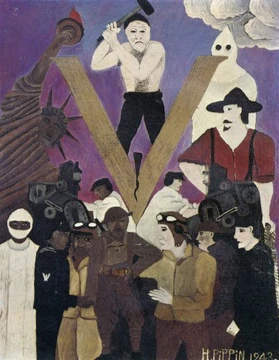
Hate crime
A criminal offense motivated by bias against a social group.
A hate crime is a standard criminal offense, such as assault or murder, that includes an added element of bias against a victim because of their physical appearance or perceived membership in a certain social group. The term emerged in the United States in the mid-1980s and has since been adopted internationally to distinguish bias-motivated violence from ordinary crime.
- field
- Criminal law
- known_for
- Bias-motivated criminal offenses with enhanced penalties
- first_used_in_legislation
- 1985 (U.S. Hate Crime Statistics Act)
- preferred_international_term
- Hate crime (OSCE)
- common_alternative_term
- Bias crime
Lore & Background
The term 'hate crime' emerged in the United States in the mid-1980s, 'a product of increased race, gender, and sexual orientation consciousness,' though the concept of bias-motivated violence has much deeper historical roots. It was used by U.S. Representatives Barbara Kennelly, John Conyers, and Mario Biaggi in 1985 via the 'Hate Crime Statistics Act.' Journalists and activists had used similar formulations earlier; the Anti-Defamation League began using 'hate crime' systematically around the same time. The term gained prominence following a 1986 incident in Howard Beach, New York, where a Black man was killed in a racially motivated attack.
Internationally, the Organization for Security and Co-operation in Europe (OSCE) has worked to standardize terminology across member states, with 'hate crime' as the preferred English term. The UN uses 'hate crime' alongside 'bias-motivated crime' and 'crimes motivated by prejudice.' Common law countries tend to use 'hate crime' or 'bias crime,' whereas civil law European countries use 'aggravated discrimination.' Some scholars prefer 'bias crime' as more precise, since 'hate' is subjective while 'bias' indicates measurable prejudice; others argue 'hate crime' better captures the emotional severity and social impact.
Hate crimes can have significant psychological consequences for direct victims and for others of the same group. Victims often experience a heightened sense of vulnerability and reminders of their marginalized status. A 1999 U.S. study of homosexual victims of violent hate crimes documented higher levels of psychological distress, including depression and anxiety, compared to victims of comparable non-bias crimes. The Supreme Court of the United States has accepted that hate crimes cause 'distinct emotional harm' to victims.
Reader's Guide
Hate crime laws are distinct from laws against hate speech: they enhance penalties for conduct already criminal under other laws, while hate speech laws criminalize a category of speech. In the United States, hate speech is a factor for sentencing enhancement, distinct from laws that criminalize speech. The FBI defines a hate crime as a traditional offense like murder, arson, or vandalism with an added element of bias. Hate itself is not a hate crime; committing a crime motivated by bias against one or more social groups constitutes a hate crime.
Sociologists Jack McDevitt and Jack Levin's 2002 study identified four motives for hate crimes: thrill-seeking (66% of all U.S. hate crimes), defensive, retaliatory, and mission offenders. Thrill-seeking perpetrators engage for excitement, often in groups; defensive perpetrators believe they are protecting their communities; retaliatory perpetrators seek revenge, often after terrorist attacks; mission offenders act on ideological reasons and are considered by the FBI to be both the rarest and deadliest form.
The term is often used retrospectively to describe historical events, from the Roman persecution of Christians to the Holocaust. A major part of defining crimes as hate crimes is determining that they were committed against members of historically oppressed groups. Hate crime victimization can reduce educational attainment among affected groups, particularly among black, non-Hispanic victims in the United States.
Did You Know?
- The term 'hate crime' emerged in the United States in the mid-1980s.
- The FBI considers mission offenders to be both the rarest and deadliest form of hate crime.
- A 1999 U.S. study found that homosexual victims of violent hate crimes experienced higher levels of psychological distress than victims of comparable non-bias crimes.
- The OSCE's Office for Democratic Institutions and Human Rights has collected hate crime data since 2009.
Frequently Asked Questions
What is Hate crime in the context of social identity studies?
Hate crime refers to a standard criminal act—like assault or murder—where the perpetrator's motivation is rooted in bias toward the victim's appearance or perceived membership in a particular social group. It sits within criminal law and is distinguished from ordinary offenses by that added element of prejudice.
When did the term Hate crime first enter legislation?
The phrase was first codified in U.S. law through the 1985 Hate Crime Statistics Act, which marked the mid-1980s as the period when the concept moved from academic discussion into formal legal language.
How does Hate crime differ from a regular criminal offense?
The underlying act (e.g., a stabbing or arson) is the same, but the bias-motivated targeting of a victim because of their group identity triggers enhanced penalties and separate tracking. This distinction allows the justice system to recognize the broader social harm beyond the individual victim.
What is the preferred international term for Hate crime?
The OSCE uses 'hate crime' as its standard label, though some jurisdictions and scholars also call it a 'bias crime.' Both terms point to the same core idea: a criminal act amplified by prejudice against a protected social group.
Why is Hate crime significant in the study of social identity and prejudice?
It provides a concrete legal lens through which researchers can examine how group-based animus translates into real-world violence. By isolating bias as a qualifying element, the concept makes visible the link between societal prejudice and tangible harm to marginalized communities.
More in Social Identity & Prejudice 1-20
Spotted an error? Know more?
This is a living reference — every entry is fact-audited, and reader corrections feed straight into our audit queue. Suggest an edit · See this site's audit record